
 النسخة العربيه
Introduction to SEO Specializations
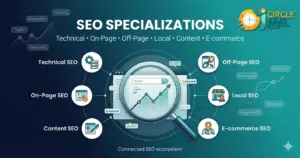
SEO specializations represent a set of technical, analytical, and creative fields aimed at improving website visibility in search engine results, such as Google. Modern digital marketing agencies rely on dividing SEO work into several integrated specializations to ensure optimal results. Circle Aims, as a digital marketing agency, relies on these specializations to build strong strategies that increase organic website visibility and achieve sustainable growth in traffic and leads.
Search engine optimization is no longer a single task, but rather an integrated system that combines technical analysis, content creation, link building, and data analysis. Each specialization performs a specific function within the overall SEO framework.
The Importance of SEO Specializations in Digital Marketing
Dividing SEO into specializations allows for more efficient management of digital marketing strategies. Modern websites contain hundreds or thousands of pages, making their optimization a complex process that requires diverse expertise.
The main benefits of SEO specializations include:
Improving the website’s technical performance
Increasing content quality
Raising search engine rankings
Enhancing the user experience
Analyzing data and making evidence-based decisions
Digital marketing agencies like Circle Aims rely on this division to build specialized teams focused on every aspect of search engine optimization.
Specialization 1: Technical SEO
Technical SEO is the technical foundation of any SEO strategy. This specialization focuses on the website’s infrastructure to ensure search engines can crawl, understand, and index pages correctly.
Key tasks in Technical SEO include:
Improving website speed
Managing robots.txt files
Creating and optimizing XML sitemaps
Addressing crawling errors
Improving internal link structure
Implementing structured data (Schema Markup)
Website speed is a critical factor in Google rankings. Slow websites lead to higher bounce rates and lower search engine rankings.
Improving the crawling experience for search engines allows them to better understand the website’s structure. This leads to faster indexing of important pages.
The second specialization: On-Page SEO
On-Page SEO focuses on optimizing the page content itself to be compatible with search engine optimization (SEO) standards.
The essential elements of On-Page SEO include:
Title tag optimization
Meta description writing
H1, H2, and H3 heading organization
Keyword optimization
Image optimization
Internal link optimization
The content must be understandable to both search engines and users. Using keywords naturally within the text helps search engines understand the page’s topic.
A well-structured heading also contributes to a better reading experience.
The third specialization: Keyword Research
Keyword analysis is the foundation of any successful SEO strategy. This specialization focuses on discovering the keywords users are searching for.
The keyword research process includes:
Search volume analysis
Competition analysis
Search intent determination
Long-tail keyword discovery
Long-tail keywords often have less competition and achieve higher conversion rates.
Keyword analysis tools include:
Google Keyword Planner
Ahrefs
SEMrush
Ubersuggest
Search intent analysis allows for the creation of content that accurately meets user needs.
Specialization 4: Content SEO
Content SEO focuses on creating high-quality content that complies with search engine standards.
Good content should:
Answer user questions
Provide reliable information
Be clearly organized
Use keywords naturally
Types of content used in SEO include:
Educational articles
Comprehensive guides
Case studies
Service pages
Long-form content often performs better in search results because it covers the topic comprehensively.
You can find Google’s official guidelines for high-quality content at the following link:
https://developers.google.com/search/docs/fundamentals/creating-helpful-content
Specialization 5: Off-Page SEO
Off-page SEO refers to all activities that take place outside of the website to improve its reputation in search engines.
The key factor in this specialization is backlink building.
Backlinks are a vote of confidence from other websites.
Off-page SEO strategies include:
Link building
Guest posting
Digital PR
Content marketing
Link quality is more important than quantity. One link from a reputable website can be more valuable than dozens of weak links.
Sixth specialization: Local SEO
Local SEO focuses on improving a company’s visibility in local search results.
This specialization is important for companies that provide services in specific geographic areas.
Key elements of Local SEO include:
Google Business Profile optimization
Managing ratings
Using local keywords
Listing the company in local directories
Companies that rely on local customers need a strong Local SEO strategy.
Seventh specialization: SEO Analytics
Data analysis is a fundamental element of any SEO campaign.
This specialization includes:
Visitor traffic analysis
Keyword ranking measurement
Conversion rate analysis
Page performance monitoring
Essential tools in this field include:
Google Analytics
Google Search Console
Ahrefs
SEMrush
Data analysis allows for continuous strategy improvement.
Specialization 8: Advanced Technical SEO
This specialization includes advanced techniques such as:
JavaScript SEO
Enterprise SEO
Multilingual Website Management
E-commerce Websites
Large websites require advanced technical infrastructure to ensure crawlability and indexing.
How to Implement SEO Specializations within Circle Aims
Successful digital marketing agencies rely on specialized teams for each area of SEO.
A typical structure for an SEO team within an agency like Circle Aims includes:
Specialization Role
Technical SEO: Optimizing the website’s technical infrastructure
Keyword Research: Keyword Analysis
Content SEO: Content Creation
On-Page SEO: Page Optimization
Off-Page SEO: Link Building
SEO Analytics: Data Analysis
This model allows for the implementation of a comprehensive SEO strategy.
Challenges in SEO Specializations
Search engine optimization is a rapidly changing field. Key challenges include:
Google algorithm updates
High competition
Changing user behavior
Evolving search technologies
SEO specialists need continuous learning to keep up with these changes.
The Future of SEO Specializations
The future of SEO is moving towards:
Artificial Intelligence
Voice Search
Enhancing User Experience
Advanced Data Analytics
Search engines are becoming more adept at understanding user intent, not just keywords.
This necessitates that digital marketing agencies develop more advanced strategies.
Frequently Asked Questions about SEO Specializations
What are the main SEO specializations?
They include Technical SEO, On-Page SEO, Off-Page SEO, Content SEO, and Data Analytics.
Why do businesses need SEO?
SEO increases visibility in search results and attracts organic traffic without paid advertising.
How long does it take for SEO to show results?
SEO typically takes 3 to 6 months to start showing results.
Is SEO important for small businesses?
Yes, because it allows small businesses to compete in search results.
What is the difference between SEO and SEM?
SEO relies on organic traffic, while SEM involves paid advertising.
Is content important in SEO?
High-quality content is one of the most important ranking factors for websites.
conclusion
SEO specializations form an integrated system for improving website visibility in search results. Combining technical analysis, content, link building, and data analysis allows for the creation of a robust digital marketing strategy.
Digital marketing agencies like Circle Aims rely on specialized teams in each area of SEO to ensure optimal website performance and sustainable growth in traffic and leads.


No comment