
 النسخة العربيه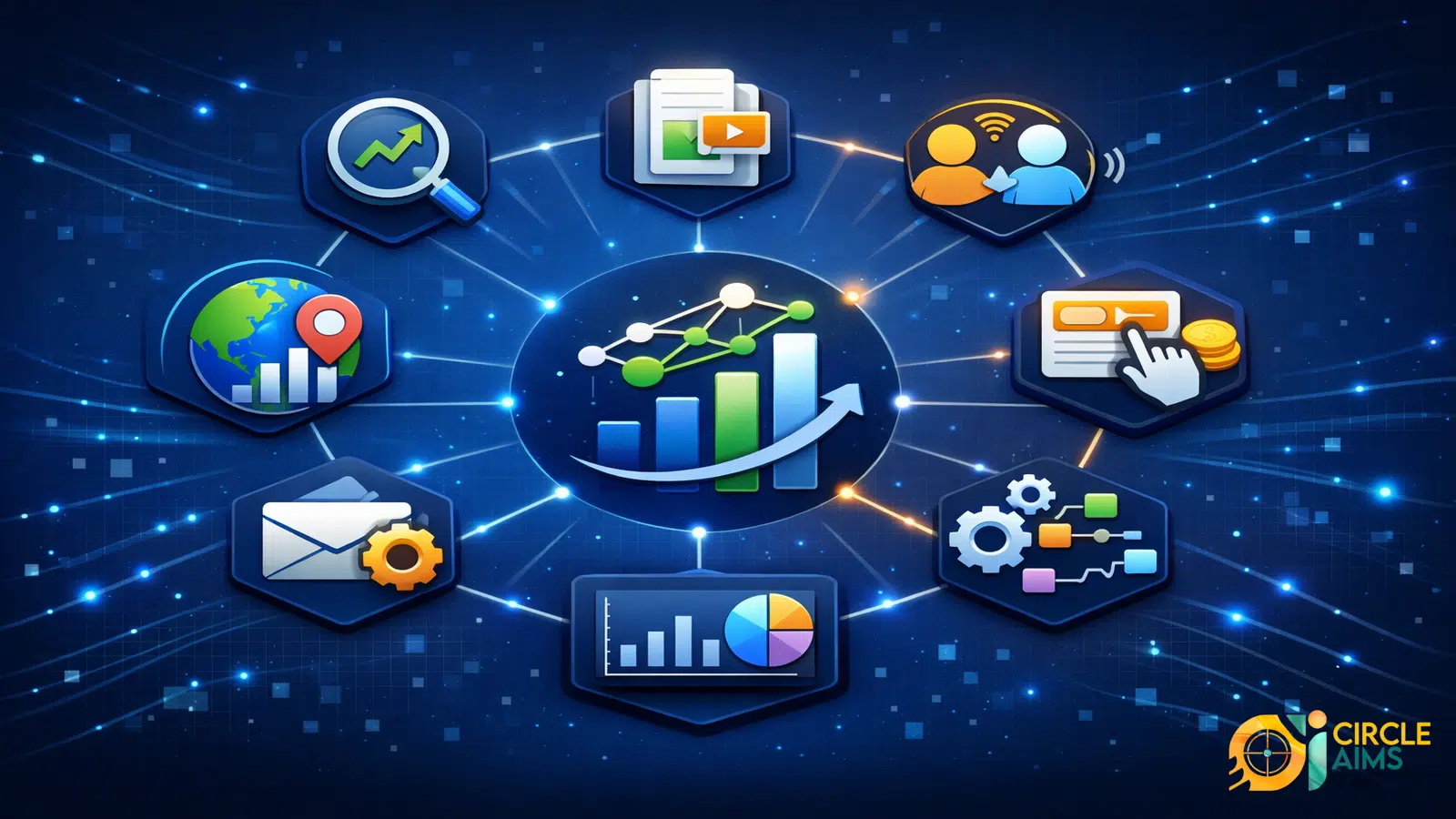
9 Powerful Specializations in Digital Marketing That Drive Growth for Modern Businesses
Introduction to Specializations in Digital Marketing
Digital marketing is no longer a single discipline. It is a collection of specialized practices that work together to build brand awareness, generate leads, and increase revenue. Businesses that attempt to manage digital marketing without specialized expertise often experience inconsistent results, wasted advertising budgets, and weak online visibility.
Specializations in Digital marketing solve this problem by focusing on distinct areas of expertise. Each specialization targets a specific component of the digital ecosystem: search visibility, content authority, advertising performance, audience engagement, or data analysis.
Agencies such as Circle Aims, a digital marketing agency in Egypt, structure their services around these specializations. This model allows professionals to concentrate on precise strategies while coordinating campaigns that align with business goals.
Organizations operating in competitive markets require a combination of these disciplines rather than relying on one tactic. For example, search engine optimization may increase website visibility, but without strong content or conversion optimization, traffic may fail to generate revenue.
Understanding the primary specializations in Digital marketing allows businesses to allocate resources effectively, build sustainable digital strategies, and maintain a competitive advantage in evolving online markets.

Search Engine Optimization (SEO)
Search Engine Optimization is one of the most critical specializations in Digital marketing. It focuses on improving a website’s visibility in organic search results. When executed correctly, SEO attracts high-intent users who are actively searching for products or services.
SEO consists of three major components:
| SEO Component | Description |
|---|---|
| Technical SEO | Improves site structure, page speed, indexing, and crawlability |
| On-Page SEO | Optimizes content, headings, keywords, and internal linking |
| Off-Page SEO | Builds authority through backlinks and digital mentions |
Search engines evaluate websites based on relevance, authority, and user experience. SEO specialists optimize these elements to increase rankings and organic traffic.
Effective SEO requires ongoing adjustments because search engine algorithms evolve frequently. Agencies that specialize in SEO analyze search trends, monitor rankings, and refine strategies to maintain performance.
A strong SEO foundation enables long-term digital growth because it produces consistent traffic without relying solely on paid advertising.
Technical SEO
Technical SEO addresses the infrastructure of a website. Search engines must be able to crawl, index, and interpret pages efficiently. If technical barriers exist, even strong content will fail to rank.
Key technical optimization factors include:
- Site speed optimization
- Mobile responsiveness
- Structured data implementation
- Secure HTTPS protocols
- XML sitemaps and robots.txt configuration
Technical SEO specialists focus on improving website performance and search engine accessibility. These improvements enhance both ranking potential and user experience.
Content SEO
Content SEO combines keyword research with structured writing that satisfies search intent. Search engines prioritize content that demonstrates authority, clarity, and relevance.
Content SEO specialists develop:
- Keyword-focused blog articles
- Landing pages optimized for conversions
- Long-form guides that establish topical authority
- Internal linking structures that distribute ranking power
High-quality content increases the likelihood of earning backlinks and maintaining long-term rankings.
Pay-Per-Click Advertising (PPC)
Pay-Per-Click advertising is a performance-driven specialization in Digital marketing that generates immediate traffic through paid search and display advertising.
Platforms used in PPC campaigns include:
- Google Ads
- Bing Ads
- Display advertising networks
- Remarketing platforms
PPC specialists manage campaigns through continuous testing and optimization. Performance metrics include:
- Cost per click (CPC)
- Conversion rate
- Return on ad spend (ROAS)
- Customer acquisition cost
Unlike SEO, which builds traffic gradually, PPC delivers instant visibility. Businesses launching new products or entering competitive markets often rely on PPC to gain immediate exposure.
The most effective digital marketing strategies integrate PPC with organic marketing channels to maximize reach and data insights.
Content Marketing
Content marketing focuses on producing valuable information that attracts and educates audiences. Instead of direct advertising, content marketing builds authority and trust.
Types of content include:
- Educational blog articles
- Industry reports
- Case studies
- Video tutorials
- Infographics
Content marketing strengthens brand credibility and supports other digital channels such as SEO and social media.
A structured content strategy follows three stages:
- Awareness – educational content that attracts potential customers
- Consideration – resources that compare solutions or provide deeper insights
- Decision – case studies and product explanations that support purchase decisions
Content marketing remains one of the most sustainable long-term growth strategies in digital marketing.
For reference on broader digital marketing practices, see the Digital Marketing overview by HubSpot:
https://blog.hubspot.com/marketing/what-is-digital-marketing
Social Media Marketing
Social media marketing focuses on building brand presence and audience engagement on social platforms. Businesses use social channels to distribute content, interact with customers, and promote products.
Major platforms include:
- TikTok
Social media specialists manage several responsibilities:
- Content scheduling and publishing
- Community engagement
- Influencer collaborations
- Paid social campaigns
The primary objective is to maintain consistent brand visibility and build relationships with audiences.
Social media also provides valuable insights into audience behavior, preferences, and feedback.
Organic Social Media Strategy
Organic social media relies on non-paid distribution. It focuses on building relationships through consistent content and authentic engagement.
Successful organic strategies include:
- Educational posts
- Industry commentary
- Interactive polls and questions
- Visual storytelling
Consistency and relevance determine the effectiveness of organic social media.
Paid Social Advertising
Paid social campaigns expand reach beyond existing followers. Platforms offer detailed audience targeting based on demographics, interests, and behaviors.
Paid social advertising can support objectives such as:
- Lead generation
- Website traffic
- Product promotion
- Brand awareness
Optimization involves testing creatives, audiences, and campaign objectives.
Email Marketing
Email marketing remains one of the highest-performing specializations in Digital marketing. It provides direct communication with audiences who have already expressed interest in a brand.
Effective email marketing strategies include:
- Automated welcome sequences
- Promotional campaigns
- Newsletter updates
- Customer retention campaigns
Email segmentation improves performance by delivering tailored content to specific audience groups.
Key metrics include:
- Open rate
- Click-through rate
- Conversion rate
- Unsubscribe rate
Automation platforms allow businesses to deliver personalized messages at scale.
Conversion Rate Optimization (CRO)
Conversion Rate Optimization focuses on improving the percentage of visitors who complete a desired action. These actions include purchases, sign-ups, downloads, or inquiries.
CRO specialists analyze:
- User behavior data
- Heatmaps and session recordings
- A/B testing results
Typical CRO improvements involve:
- Optimizing landing page design
- Improving call-to-action placement
- Simplifying forms and checkout processes
- Enhancing page load speed
Even small improvements in conversion rates can significantly increase revenue without increasing traffic.

Affiliate Marketing
Affiliate marketing is a performance-based model where partners promote products and receive commissions for successful conversions.
Affiliates may include:
- Bloggers
- Influencers
- Review websites
- Industry publishers
This model expands brand exposure while limiting financial risk, because payment occurs only when results are generated.
Affiliate management involves tracking links, managing partnerships, and preventing fraudulent activity.
Marketing Analytics and Data Strategy
Marketing analytics measures the performance of digital campaigns. Without data analysis, marketing decisions rely on assumptions rather than measurable outcomes.
Analytics specialists evaluate:
- Traffic sources
- User behavior
- Conversion paths
- Campaign ROI
Common analytics tools include:
- Google Analytics
- Search Console
- Advertising dashboards
- Customer data platforms
Data analysis enables continuous optimization. Businesses can identify which channels produce the highest value and allocate resources accordingly.
Influencer Marketing
Influencer marketing leverages trusted online personalities to promote products or services. Audiences often view influencer recommendations as more authentic than traditional advertisements.
Influencer partnerships can involve:
- Sponsored content
- Product reviews
- Social media collaborations
- Affiliate partnerships
Successful influencer campaigns prioritize alignment between brand values and influencer audiences.
Micro-influencers with smaller but highly engaged audiences often produce stronger conversion rates than large celebrity influencers.
Local Digital Marketing
Local digital marketing targets geographically specific audiences. Businesses operating in cities or regions depend on visibility in local search results.
Local marketing strategies include:
- Google Business Profile optimization
- Local SEO keyword targeting
- Location-specific content
- Localized advertising campaigns
For agencies operating in Egypt, local digital marketing ensures visibility for audiences searching within regional markets.
Integrated Digital Marketing Strategy
Each specialization contributes a specific capability. However, digital marketing produces the strongest results when strategies are integrated.
An integrated approach may include:
| Channel | Strategic Role |
|---|---|
| SEO | Long-term traffic acquisition |
| PPC | Immediate visibility |
| Content Marketing | Authority and education |
| Social Media | Community engagement |
| Email Marketing | Customer retention |
Agencies coordinate these channels so that campaigns reinforce one another.
Integrated strategies improve efficiency because data insights from one channel inform decisions in another.
How Circle Aims Applies Specializations in Digital Marketing
Circle Aims operates as a digital marketing agency in Egypt that structures its services around specialized expertise.
The agency focuses on:
- Strategic SEO campaigns
- Data-driven advertising management
- High-authority content development
- Social media engagement strategies
- Conversion-focused web optimization
This structured approach ensures that each marketing component supports broader business objectives.
Rather than relying on isolated tactics, Circle Aims coordinates multiple digital marketing disciplines to deliver measurable performance improvements.
FAQs About Specializations in Digital Marketing
1. What are the main specializations in Digital marketing?
The primary specializations include SEO, PPC advertising, content marketing, social media marketing, email marketing, analytics, conversion rate optimization, affiliate marketing, and influencer marketing.
2. Why are specializations in Digital marketing important?
Digital marketing contains complex channels that require focused expertise. Specializations allow professionals to master individual areas while contributing to broader marketing strategies.
3. Which digital marketing specialization generates the fastest results?
Pay-Per-Click advertising typically produces the fastest results because it generates immediate traffic through paid placements.
4. Which specialization provides long-term growth?
Search Engine Optimization and content marketing produce sustainable long-term growth by generating organic traffic.
5. Can a business rely on only one digital marketing specialization?
Relying on a single channel limits growth potential. Integrated strategies combining multiple specializations produce stronger and more consistent results.
6. How do digital marketing agencies structure these specializations?
Agencies typically assign teams to each discipline, including SEO specialists, paid advertising managers, content strategists, and data analysts. Collaboration between teams ensures cohesive campaign performance.
Conclusion
Digital marketing has evolved into a complex ecosystem composed of multiple disciplines. Each specialization contributes a unique capability: search visibility, paid advertising performance, audience engagement, or data-driven optimization.
Businesses that recognize and apply these specializations gain a significant competitive advantage. They can attract the right audiences, convert visitors into customers, and maintain sustainable growth in digital markets.
Agencies such as Circle Aims demonstrate how structured expertise across multiple digital marketing disciplines enables organizations to compete effectively in modern online environments.


No comment